Having trouble consistently getting healthy, breakfasts if any breakfast and packing a lunch. Need tips on suggestions?

So generally my schedule is so tight. I've been struggling to pack a lunch in the morning. I guess I should do it the night before and I've been struggling even harder to get a good nutritious breakfast before I have to head out the door resulting in me eating a lot of processed stuff for cheap fast food and I'm trying to get healthy and I'm looking for something one for breakfast that I can take on the go. I definitely need to lose body fat and I'm looking for a quick healthy lunch that's easy and cheap. Everything needs to be real cheap. I'm a busy dad with two kids, just any recipes. I am okay eating the same exact thing every single day, but I'm having trouble needing my protein needs and having trouble eating my fiber needs my healthy fats needs and powering through my day. I have a very physical active job. I'm averaging 25 to 30,000 steps 5 days a week while pushing heavy carts
 
Hello!
There are several helpful guides on this site, which don´t take too long to read if you are interested:

https://darebee.com/fitness/healthy-eating-when-you-cant-cook.html
https://darebee.com/fitness/budget-healthy-eating.html
https://darebee.com/fitness/healthy-eating-tips.html
https://darebee.com/fitness/mediterranean-diet-explained.html
https://darebee.com/fitness/guide-to-meal-prep.html

Healthy eating is not expensive (contrary to popular belief) nor complicated. What it takes though, is a little bit of planning ahead (which becomes automatic after a while), and the actual prep-time. I understand "busy" very well, but perhaps you can turn meal-prep times into fun sessions with your kids helping? Meal-prep itself doesn´t have to be complicated or time-consuming either (it is explained in one of the guides above). The little extra time spent in your kitchen (as opposed to grabbing fast-food) rewards you with stellar health, which is a great trade, in my experience. And even healthy shopping can be easier - e.g. I order my beans, grains, seasonings, nuts, dried fruit online in large bags and cheap - I don´t have to go anywhere. Grabbing pre-packaged salad or canned or frozen veggies & fruit is also very fast.

For protein, especially if you work out or work in your job as much as you do, I think that a protein powder really helps. There are many options, including on the cheaper side - just stay away from artificially sweetened or colored kinds.

Good luck!
 
My go-to breakfast has become oats for all the reasons you describe. I have a Pyrex (glass) bowl with a rubber lid. Every night before bed I put a cup of oats and a cup of water into the bowl and mix these together, then I add some frozen fruit on top, put the lid on the bowl, and stick it in the refrigerator. The next morning I top my oats with some no-fat Greek-style yogourt and a handful of nuts. If I have pumpkin or sunflower seeds and/or cacao nibs, I sprinkle a few of these on top as well. Voilà! Breakfast is ready to go! If I need to take it on the road, I just pop the lid back on the bowl, and I'm out the door.
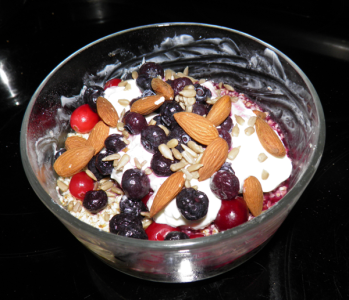
oats600.png

1 cup oats = 21 grams protein + 12 grams fibre + 480 kCal
1/2 cup Greek style yogourt = 10 grams protein + 80 kCal
1/3 cup almonds = 10 grams protein + 6 grams fibre + 290 kCal

seeds are ~ 5 grams protein + 1 gram fibre per 100 kCal
the fruit adds some fibre and a tiny amount of protein as well

With the fruit and seeds added I figure this is around a 1000 kCal breakfast. So not calorie light for sure! But it has an excellent nutrition profile, and is filling and keeps me going all morning without any need for snacking. At 41 grams it's pretty great on the protein front. But if you needed more you could use milk (or a protein-fortified nut milk) in place of the water and/or mix some unsweetened protein powder into whatever liquid you choose.

I have eaten this almost daily for 10 weeks now, and I'm not bored of it yet. Which is saying something for me! I like a lot of variety and strong flavours in my food. With oats, I get the variety by changing up the type of fruit and other toppings I add.

Important to note: I only use whole, unadulterated fruits--usually frozen, because I like berries, and they're much less expensive where I live if purchased frozen. I don't use canned fruit because it has the peel (and therefore much of the fibre) stripped out, and also contains added sugars (as it's packed either in syrup or a super sweet fruit juice). One also needs to be careful with dried fruit. Unless it's a super sweet fruit (like grapes), dried fruit has sugar added to it as well. (Cranberries--which I love--have heaps of sugar added to them when sold dried.) I sometimes add a couple of chopped up dried apricots--which, like raisins, tend to be sold without added sugar--to my oats. But this is an occasional thing as they are a much sweeter fruit than berries.

For reference:

rhubarb contains 1.69 grams fibre per gram of sugar
raspberries contain 1.48 grams fibre per gram of sugar
cranberries contain 0.85 grams fibre per gram of sugar
strawberries contain 0.41 grams fibre per gram of sugar
blueberries contain 0.24 grams fibre per gram of sugar
apricots contain 0.14 grams fibre per gram of sugar
raisins contain 0.07 grams fibre per gram of sugar
dried cranberries (which are sweetened) are as bad as raisins on the fibre/sugar ratio: 0.07 grams fibre per gram of sugar
(This last one is going to depend on the amount of added sugar, which could vary from one brand to the next. I've used numbers from myfooddata.com to get the above ratios.)

So definitely all fruit is not created equal when it comes to their nutrition profiles.
 
If I may offer another example…
  • I make oatmeal (with toppings) for breakfast. By default, I cook it on the stove the morning of. If I’ll be rushed in the morning, I’ll make overnight oats, as per previous answer. This has been my default breakfast for over 8 years.
  • The pinch-hitter: oat bars (protein version). I make a double, or even a quadruple, batch of these (which is determined by the size of the can of coconut milk). After cutting them, I’ll wrap them individually and put them in the freezer. Ready to eat after a few minutes of thawing (my favourite summer breakfast, tbh), but will be good if eaten a few hours later too.
  • If packable, I’ll pack whatever I’m having for dinner after dinner, or even before I put food on my plate. I take care when planning my meals that the meal is packable or that I have an alternative available (ie. oat bars most often) on the days I need to pack a lunch.
 
My easy lazy quick lunch for. work is half of the jar of mixture (beens, corn, carrot) hope you can found something like this where you live with half tofu ( around 100 gr), half bell pepper and sometimes half avocado or some hummus (used to use mayo but decided skipping it due to fat content)
 

Attachments

  • 1000091444.jpg
    1000091444.jpg
    61.7 KB · Views: 0
Also oats for breakfast here, we use bowl in the bowl method: to the lower bowl we put some hot water, to the top one, goes 4 spoons of oats, 3 spoons of mixed (chia, flex seeds, sesame) some blueberries or banana, or frozen cherries) + hot water) then we cover it and wait for about 20-25 min then we add some plant milk and a spoon of yogurt (if currently in our fridge) :) eating like this for couple of years already 4-5 days a week